Can the Stablecoin in Your Wallet Be Frozen?
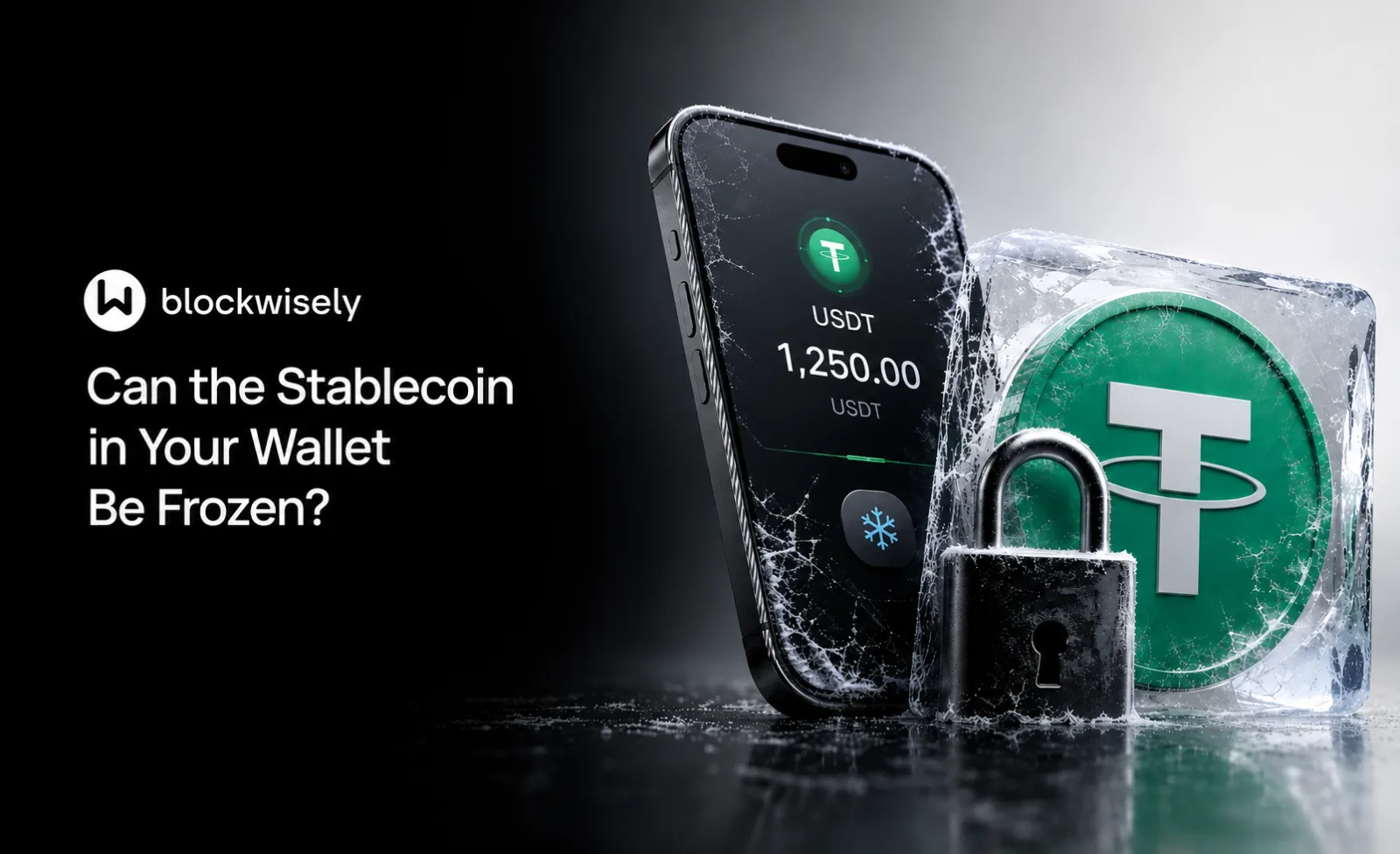
Stablecoins are popular because they feel simple.
You can hold USDT, USDC, or another dollar-linked token in your wallet. You can send it to another person. You can use it for trading, savings, payments, or moving money across borders.
But there is one question many crypto users do not ask until something big happens:
Can the stablecoin in your wallet be frozen?
The answer is yes, in some cases.
A recent Tether freeze has brought this question back into focus. Blockchain investigator ZachXBT flagged a large USDT movement involving a Tron wallet that reportedly received about $120.2 million USDT. Soon after, Tether froze about $72 million in USDT linked to the activity.
For many people, this sounds strange.
After all, crypto is supposed to be about self-custody. If the money is in your wallet, and you control the private keys, how can anyone freeze it?
The answer depends on what kind of crypto asset you are holding.
Stablecoins Are Not the Same as Bitcoin
Bitcoin and stablecoins are both crypto assets, but they are not the same thing.
Bitcoin is a decentralized cryptocurrency. There is no company behind Bitcoin that can freeze one user's BTC. If you control your private keys, no central company can blacklist your Bitcoin address and stop your BTC from moving.
Stablecoins work differently.
Many popular stablecoins are issued by companies. USDT is issued by Tether. USDC is issued by Circle. These companies create tokens that are designed to follow the value of the U.S. dollar.
That makes stablecoins useful. They give people a way to hold dollar value on-chain without constantly moving in and out of banks. This is especially important in countries where people want easier access to digital dollars.
But because many stablecoins are issued by centralized companies, they can come with controls that Bitcoin does not have.
One of those controls is the ability to freeze tokens.
What Does It Mean When a Stablecoin Is Frozen?
When people hear that a wallet has been frozen, they may think the whole wallet has been blocked.
That is not always correct.
In many cases, what gets frozen is not the entire wallet. What gets frozen is a specific token inside that wallet.
For example, if an address holds USDT, ETH, and another token, a USDT freeze may stop the USDT from moving. But it does not automatically freeze the ETH or every other asset in the same wallet.
The wallet may still be visible on the blockchain. The balance may still show. The user may still control the private keys. But the frozen stablecoin may no longer be transferable.
In simple terms: the wallet can still exist, but the frozen stablecoin inside it may become unusable.
How Can USDT Be Frozen?
Stablecoins like USDT are smart-contract-based tokens on blockchains such as Ethereum and Tron.
The stablecoin issuer controls the token contract. That contract can include functions that allow the issuer to blacklist certain addresses.
When an address is blacklisted, the contract can block transfers from that address. In some cases, it can also block transfers to that address.
This means the blockchain itself may still be running normally, but the stablecoin contract refuses to process that token transfer.
That is why a person can still open their wallet and see the USDT balance, but fail when trying to move it.
To a beginner, this can feel confusing. The money appears to be there, but it cannot be spent.
Why Would a Stablecoin Issuer Freeze Funds?
Stablecoin issuers usually say they freeze funds for legal and compliance reasons.
Common reasons include:
- Law enforcement requests
- Stolen funds from hacks
- Scams and fraud cases
- Sanctioned addresses
- Money laundering investigations
- Terrorism financing investigations
- Human trafficking or other serious crimes
In the latest case, the frozen USDT was linked to suspicious movements after a very large transfer. ZachXBT flagged the activity, and Tether later blacklisted a wallet holding about $72 million USDT.
The situation also attracted attention because the funds were reportedly linked to large Monero buying activity. Monero is a privacy-focused cryptocurrency, and large purchases can attract attention when they appear connected to suspicious fund flows.
This does not mean every Monero user is doing something wrong. It only means that privacy coins are often watched closely when large suspicious transfers happen.
Can This Happen to an Ordinary User?
For most ordinary users, a stablecoin freeze is unlikely.
If you are buying USDT from a reputable exchange, receiving money from normal sources, and not involved in suspicious transactions, your stablecoin is not likely to be frozen.
But "unlikely" does not mean "impossible."
There are situations where innocent users can face problems. For example, someone may receive funds that passed through a hacked wallet, scam address, or sanctioned service before reaching them. This is sometimes called "tainted funds."
Crypto transactions are traceable on public blockchains. If a stablecoin issuer, exchange, or analytics company links funds to suspicious activity, that can create problems for later holders.
This is why large businesses, OTC desks, and professional crypto traders often check wallet risk before accepting big stablecoin payments.
For a small everyday user, this may not be something they think about daily. But it is still important to understand the risk.
Does Self-Custody Protect You From Stablecoin Freezes?
Self-custody protects you from some risks, but not all risks.
When you use a self-custody wallet, you control your private keys. That means an exchange cannot lock you out of your account the same way it can with a custodial exchange account.
But if the token itself has a blacklist function, self-custody does not fully protect you from that token being frozen.
This is the part many beginners miss.
Self-custody gives you control over the wallet keys. It does not remove the rules built into a centralized stablecoin contract.
So, yes, you can hold USDT in your own wallet. But the USDT contract may still have issuer-level controls.
That is the difference.
Stablecoins Give Convenience, But Not Full Censorship Resistance
Stablecoins are useful because they are fast, liquid, and easy to understand. One USDT is designed to be worth about one U.S. dollar. This makes stablecoins easier for many people to use than volatile crypto assets.
In Africa, stablecoins have become especially important.
People use them for cross-border payments, savings, trading, freelance payments, remittances, and business settlements. In countries where access to dollars is limited or expensive, stablecoins can feel like a major financial tool.
But users should know what they are holding.
USDT is not Bitcoin. USDC is not Bitcoin. A stablecoin may move on a blockchain, but it can still be controlled by an issuer.
That does not automatically make stablecoins bad. It means they are different.
What Happens If Your Stablecoin Is Frozen?
If your stablecoin is frozen, you may still see the token balance in your wallet.
But when you try to send it, the transaction may fail.
Depending on the chain and wallet interface, you may see an error message. In other cases, the transaction may simply not go through.
At that point, the user may need to contact the stablecoin issuer, the exchange involved, or legal support, depending on the situation.
If the freeze is connected to law enforcement or sanctions, resolving it may be difficult.
If the freeze happened because the user unknowingly received suspicious funds, the user may need to prove the source of funds and show transaction history.
This is why stablecoin users should be careful when receiving large amounts from unknown people.
How Can Users Reduce the Risk?
There is no perfect way to remove all risk, but users can reduce it.
- Use reputable exchanges and platforms. Do not buy stablecoins from random strangers if you do not understand the risk.
- Avoid deals that look too good to be true. If someone is offering USDT at a very unusual discount, there may be a reason.
- Be careful with large payments from unknown wallets. For serious amounts, it may be worth checking the wallet history using blockchain analytics tools.
- Keep records. If you are doing business with stablecoins, keep invoices, chats, exchange records, and payment details. These can help if you ever need to explain where funds came from.
- Know the difference between stablecoins and decentralized crypto assets. They do not carry the same risks.
What This Means for Crypto Users
The latest Tether freeze is not just a story about one big wallet.
It is a reminder that stablecoins are part crypto and part traditional finance.
They run on blockchains, but many of them are issued by companies. They can move quickly across borders, but they can also be frozen when issuers act on legal or compliance concerns.
For beginners, the lesson is simple:
A stablecoin in your wallet can still be subject to issuer control.
That does not mean you should stop using stablecoins. It means you should use them with a clear understanding of how they work.
FAQ
Can USDT in my wallet be frozen?
Yes. USDT can be frozen if the wallet address is blacklisted by Tether. The balance may still appear in the wallet, but the frozen USDT may not be transferable.
Does a USDT freeze freeze my whole wallet?
Usually, no. A USDT freeze normally affects the USDT token. Other assets in the same wallet may still be movable unless they are affected by their own separate restrictions.
Can Bitcoin be frozen like USDT?
Bitcoin itself cannot be frozen by a central company because there is no Bitcoin issuer with blacklist control. However, exchanges and custodial platforms can freeze user accounts.
Why does Tether freeze USDT?
Tether may freeze USDT linked to hacks, scams, sanctions, law enforcement requests, money laundering investigations, or other illegal activity.
Can an innocent user receive frozen or risky USDT?
It is possible. A user may unknowingly receive funds that are linked to suspicious past activity. This is why users should be careful when accepting large payments from unknown sources.
Are stablecoins safe to use?
Stablecoins are useful, but they carry risks. These include issuer control, regulatory risk, depeg risk, smart contract risk, and counterparty risk. Users should understand these risks before using them heavily.
Read the full breakdown on Blockwisely
More on stablecoins, crypto safety, and how this space actually works.
Read on Blockwisely