How to Actually Compare Software Without Losing Your Mind
You know the feeling. You need a new tool — maybe a project tracker, maybe an invoicing app, it doesn't matter — and you open a new tab to "just quickly compare a few options."
Ninety minutes later you have fourteen tabs open, three of them are "Top 10 Best [Category] Tools in 2026" listicles that are suspiciously identical, and you still don't know which one to pick. You just know you're tired.
We've all been there. So let's talk about why software shopping feels so exhausting, and a few ways to make it actually bearable.
Why This Is Harder Than It Should Be
Here's the thing nobody says out loud: most "comparison" content online isn't really comparing anything. A ton of it is written by affiliates who get paid when you click through and sign up, so guess which tool always ends up at #1? It's usually whoever pays the highest commission, not whoever's actually best for you. Add in a wave of AI-written roundups that all copy each other's bullet points, and you end up with ten articles that read like they were written by the same slightly confused robot.
Then there's the reviews themselves. Star ratings on the big review sites can be gamed — a founder asks their whole team and a few friendly customers to leave five stars during launch week, and suddenly a mediocre tool looks like a category leader. Not always malicious, just... not exactly reliable either.
None of this is your fault. The information is just messier than it should be for something as simple as "which app do I download."
A Simpler Way to Think About It
Before you open a single comparison site, spend two minutes answering this: what's the one thing this tool needs to do well? Not five things. One. If you're picking a project tracker, is the real priority "my team will actually use it" or "it needs to integrate with the accounting software we already have"? Pick the priority first, then everything else becomes a tiebreaker instead of a dealbreaker.
Once you know that, here's what actually matters when you're comparing options:
- Who's behind it. Is this an actively maintained product with a real company and a support team, or a side project that hasn't shipped an update in two years? You can usually tell within thirty seconds of looking at their changelog or "what's new" page.
- What it actually costs you. Not just the sticker price — the per-seat pricing that quietly triples your bill once your team grows, or the "free forever" plan that's missing the one feature you need. Read the pricing page like a contract, because it kind of is one.
- What happens when something breaks. Every tool breaks eventually. Does this company have a support team that responds, or a community forum where your question from 2023 is still unanswered?
- Whether it plays nice with what you already use. A brilliant tool that doesn't talk to the other three tools you rely on daily will get abandoned within a month. Integrations aren't a nice-to-have, they're often the whole ballgame.
Where Verified Listings Actually Help
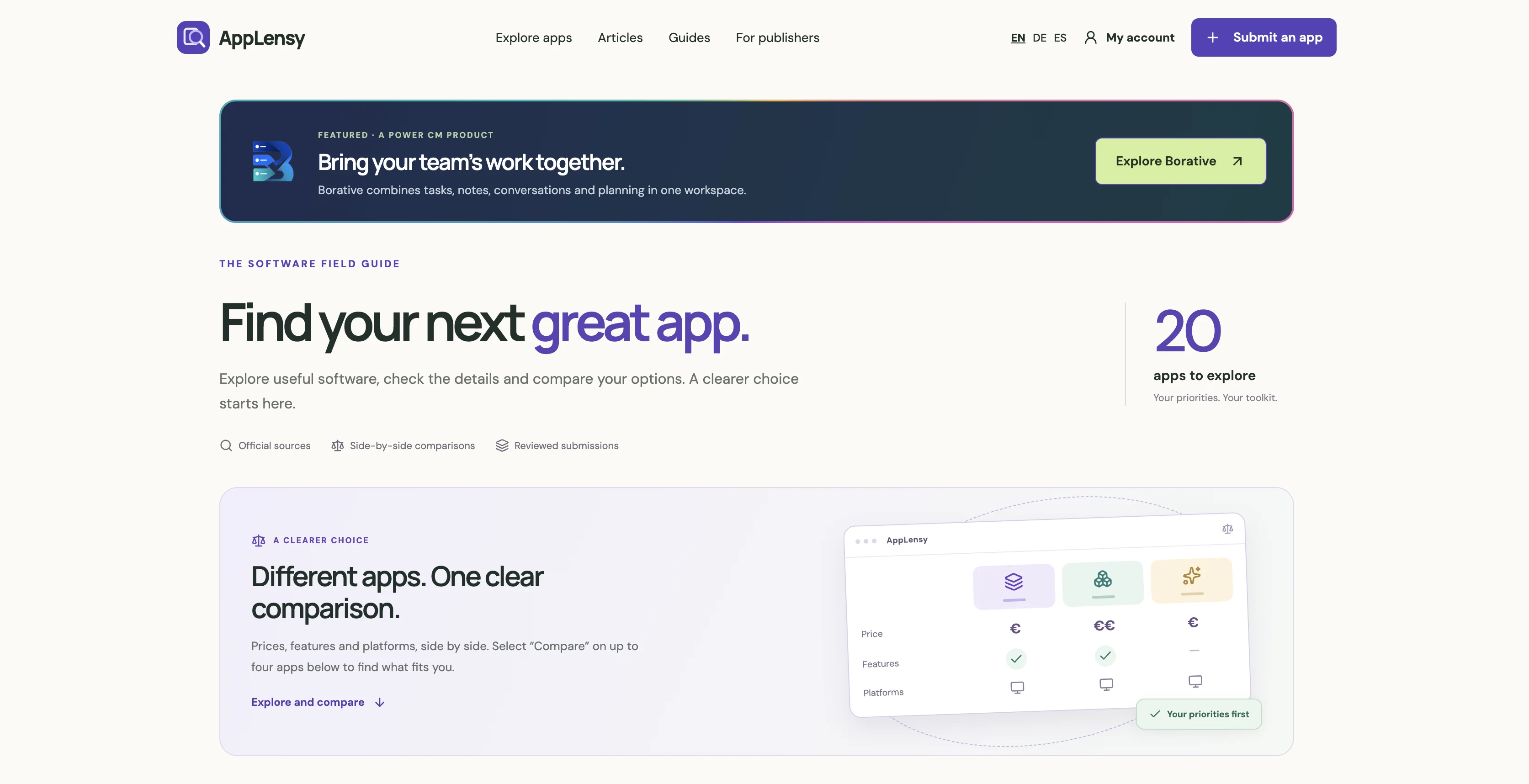
This is the part where a directory built on verified, publisher-submitted listings earns its keep. Instead of guessing whether a review is real or an affiliate wrote the roundup to hit their quota, you're looking at information the software maker actually stands behind — current pricing, actual platform support, real feature lists, not screenshots from three versions ago. It's not a replacement for your own judgment (nothing is), but it cuts out a huge chunk of the noise before you even start comparing.
Side-by-side comparisons work the same way. Instead of tab-switching between four different "reviews" written in four different voices with four different agendas, you can put a handful of real contenders next to each other and actually see where they differ — same categories, same format, no marketing spin dressed up as an unbiased opinion.
The Two-Tool Rule
Here's a small trick that saves a lot of decision fatigue: narrow your options down to two, maybe three, before you start doing deep research. Not ten. Not "let me just check a few more." Two or three. You will never run out of new options to consider if you keep the list open-ended, and at some point the marginal difference between option #7 and option #9 stops mattering more than the hours you're burning comparing them.
Pick your top two based on the priority you set earlier, actually try them (most decent tools have a free trial or a generous free tier), and go with the one that felt less annoying to use on day one. That feeling is data too.
The Bottom Line
You don't need to read every listicle on the internet or click through forty affiliate links to make a good software decision. You need to know what you actually need, look at information you can trust, and give yourself permission to stop comparing once you've got a couple of solid options. The best tool isn't always the one with the most five-star reviews — it's the one that quietly does its job so you can stop thinking about it and get back to yours.
Ready to compare with confidence?
Skip the affiliate rankings and gamed reviews — browse verified listings and compare your options side by side on AppLensy.
Visit AppLensy