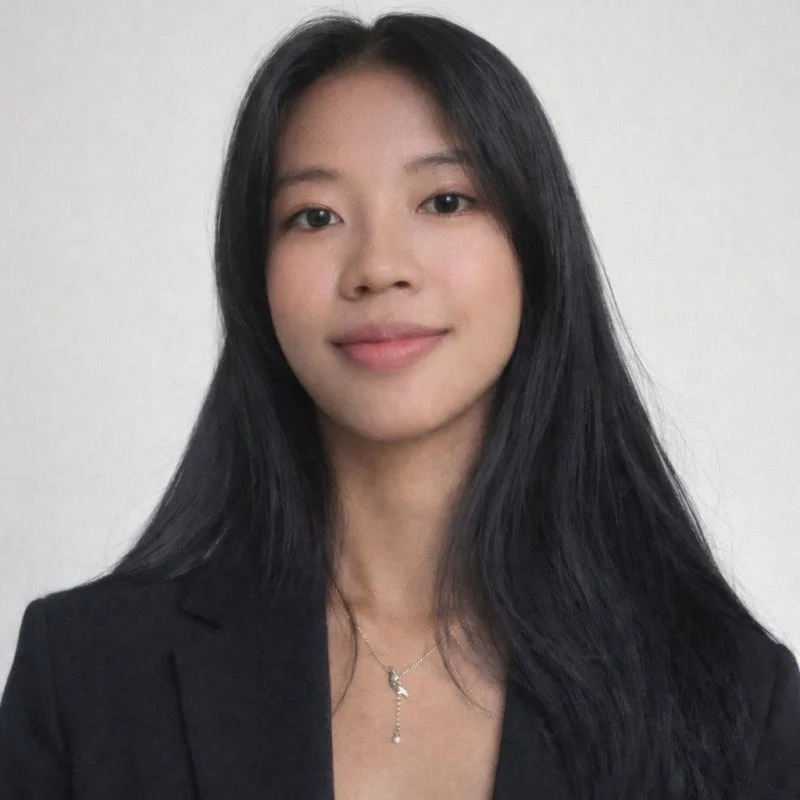
Alizay Ayesha's Story: From a Girl Sitting at a Computer to Building Two Technology Companies
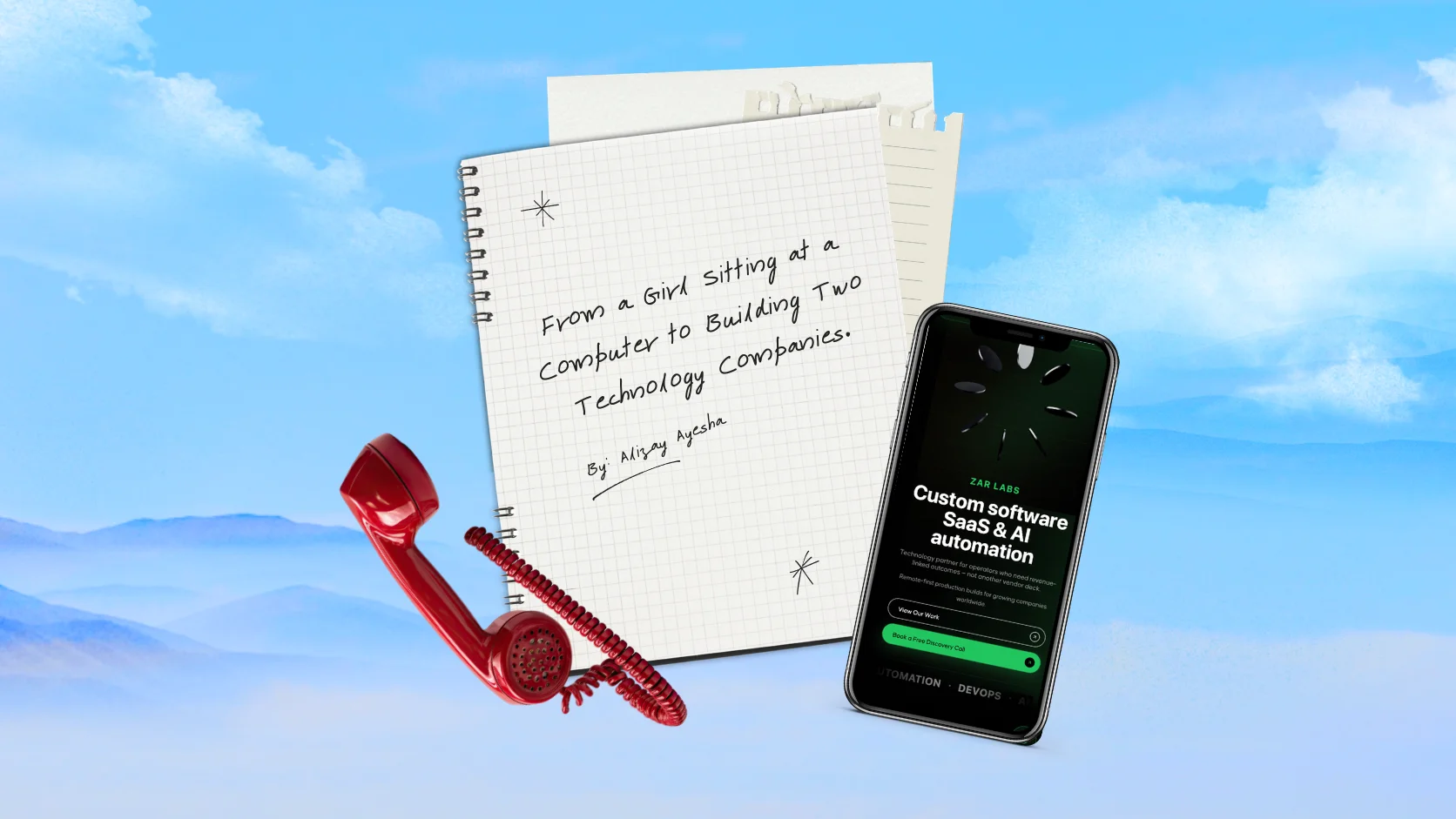
I did not have a roadmap. I built one.
If someone had shown me a picture of myself as a little girl sitting in front of a computer and told me that one day I would become the Founder & CEO of a technology company, Co-Founder of another, work with international businesses, build AI systems, study Data Science, speak and participate in technology communities, and walk into rooms filled with technology leaders carrying the vision of companies I had built myself — I probably would not have believed them.
But that little girl was already pointing in the right direction. I just didn't know it yet.
Today, I am building Zar Labs, where my work spans AI, software engineering, automation and business systems, while also serving as Co-Founder of Vyzion Systems and continuing my own education in Data Science.
The distance between that childhood photograph and where I am today was not one giant leap. It was thousands of small decisions.
- Learn one more technology.
- Build one more project.
- Write one more article.
- Take one more opportunity.
- Enter one more room.
- Have one more difficult conversation.
- And, most importantly, refuse to stop.
Maybe Technology Found Me Before I Found Myself
A friend, Eddy, once wanted to see my childhood photographs. We opened an old album and started going through the pictures. Then I saw her. Me. A little girl sitting in front of a computer.
There was something strangely emotional about that photograph, because years later, I could finally understand what that child could not. Technology was never simply a career choice for me. It was always something I was naturally drawn toward.
At school, I chose Computer Science over Biology. I loved computers. I enjoyed fixing things. I was fascinated by how technology worked. At the time, I didn't know about startups, AI architecture, software companies or entrepreneurship. I simply liked computers.
Sometimes your future announces itself quietly long before you are mature enough to recognize it.
I Took a Detour — But I Came Back Stronger
My journey wasn't perfectly planned. For a while, I believed banking and finance might be my future. My academic path after college did not align with the career I eventually wanted either. And then COVID disrupted an entire generation's plans.
But there was something interesting about my relationship with technology. Even before I fully understood where I was going, I had already touched Generative AI as a teenager and completed a course in it.
Then life happened. Academics took over. The world changed. And my technology journey paused. But it didn't disappear.
Eventually, I reached a point where I had to make a decision: do I continue following the path I had been given, or do I build the path I actually want? I chose the second.
I Started With JavaScript
I didn't return to technology with some grand five-year plan. I started learning: JavaScript, then TypeScript, HTML, CSS, jQuery, responsive web design. I completed FreeCodeCamp's Responsive Web Design certification and kept going.
Then came SASS, React, Bootstrap and Redux. After frontend development, I moved into backend development: NPM, Node.js, Express.js, MongoDB, Mongoose, APIs. I completed FreeCodeCamp's Back End Development and APIs curriculum and built multiple backend projects.
Then came data visualization — graphs, bar charts, heat maps, choropleth maps, treemaps. I remember how exciting it felt to take something that existed as raw information and transform it into something people could actually understand.
And somewhere in that process, I stopped seeing programming as simply a technical skill. I started seeing it as a language for building.
I Wasn't Just Collecting Certificates
My journey has included many certifications and learning milestones — from FreeCodeCamp and PIAIC to machine learning education through Stanford University and DeepLearning.AI. But the certificates themselves aren't the story. The story is what happened between them.
There were sleepless nights. There were periods of intense learning. There were times when I was dealing with illness and still trying to keep moving. There were moments when something that seemed simple to everyone else took me hours to understand. And there were moments when I wondered whether all of this effort would eventually become something meaningful.
I kept going, because I discovered a principle that has stayed with me: if I don't know how to do something, I can learn. That mindset became more valuable than any individual technology I learned.
From Learning to Doing
Eventually, technology stopped being something I was learning only for myself. I started working on client projects. That changed my understanding of what it meant to be a developer.
A tutorial can tell you how something works. A client gives you a problem and expects you to figure out the rest. That meant learning how to communicate, how to understand business requirements, how to make technical decisions, how to solve problems under pressure, how to deliver, and how to take responsibility when something carries your name.
I was still learning, but I was no longer learning passively. I was learning through responsibility. That was the beginning of my transition from developer to technology professional — and eventually, from technology professional to founder.
I Found My Voice Too
While I was developing technically, I also started writing. I joined Medium and began publishing. At first, I had doubts. Would people care? Would anyone read what I wrote? Would a young developer from Pakistan have anything meaningful to contribute to a global technology conversation?
I wrote anyway. Over time, I built a community of more than 2,000 followers, including experienced and PhD-level professionals who engaged with my work.
That experience taught me something important: you don't need to wait until someone gives you a platform before you start contributing. Sometimes you build the platform yourself. Sometimes you write before you are recognized. Sometimes you build before anyone knows your name. And eventually, consistency creates its own credibility.
Then AI Became More Than a Fascination
My curiosity eventually led me deeper into Artificial Intelligence and Machine Learning. I started with AI for Everyone and eventually moved into Andrew Ng's Machine Learning Specialization through Stanford University and DeepLearning.AI. I studied supervised learning, advanced learning algorithms, unsupervised learning, recommender systems and reinforcement learning.
This was different from simply learning another programming framework. It changed the way I thought about technology. I began thinking about intelligence, patterns, data, prediction, decision-making, automation, and what happens when software moves from simply following instructions to assisting with decisions and workflows.
I had been fascinated by robotics and AI for years. Now I was beginning to understand the foundations behind the fascination.
The Shift: I Didn't Want to Just Learn Technology
There came a point where I started asking myself a different question. Not "What else can I learn?" but "What can I build?" That question changed the trajectory of my life.
I began thinking about software as complete systems rather than isolated projects — architecture, business requirements, automation, data, user workflows, operations, commercial value, and the relationship between technology and the businesses that use it.
I was no longer satisfied with simply knowing how to build something. I wanted to understand why it should exist. That is when the founder inside me started becoming visible.
Building a Business at 20
One of the most defining parts of my journey is that I started building my business unusually young. At around 20, while many people my age were still trying to decide what they wanted to do, I was already trying to figure out how to build something of my own.
And that meant learning far more than technology. I had to learn business development, sales, marketing, client management, operations, leadership, negotiation, networking, product thinking, and how to walk into a professional conversation and represent something I had built myself.
There is a difference between saying "I know how to code" and saying "I am responsible for the company delivering this solution." The second carries weight. It also carries accountability. That transition changed me.
Zar Labs
That journey became Zar Labs. I founded Zar Labs to build technology around actual business problems — software, AI, automation and systems designed to move businesses forward.
The company became more than a collection of projects. It became a representation of how I wanted to work: understand the problem, think about the architecture, build the system, make it useful, and create technology that has a reason to exist.
As Founder & CEO, I quickly realized that entrepreneurship doesn't allow you to stay inside one job description. One day, I am thinking about software architecture. Another day, I'm speaking to a client. Another day, I'm thinking about marketing. Another day, I'm reviewing an automation workflow. Another day, I'm working on partnerships. And sometimes all of those things happen before the day is over. That is the reality of building a company.
I Also Stepped Into Architectural and Real-Estate Work
My work expanded beyond conventional software projects. I began exploring the intersection between technology, architecture, building and real-estate businesses, including work around how properties and building-related businesses can position and market themselves more effectively.
That experience taught me another important lesson: technology doesn't exist in isolation. A software system can support a property business. Marketing can change how a development is perceived. Data can influence decisions. Digital systems can connect operations, customers and revenue.
The more industries I encountered, the more I understood that good technology is ultimately about understanding the business underneath it.
Then Came Vyzion Systems
Zar Labs was not the final destination. My entrepreneurial journey expanded internationally when I became Co-Founder of Vyzion Systems, building alongside an international team and developing a Pakistan–Brazil connection.
That experience pushed me into another level of entrepreneurship — international collaboration, cross-border communication, different markets, different perspectives, different ways of thinking about technology and business.
It also reinforced something I had already started believing: where you start does not have to determine how far you can go. I am building from Pakistan. But I think globally.
I Started Entering Rooms I Once Only Watched From a Distance
As my work developed, I became increasingly involved in technology communities, events and professional networks. I didn't want to build companies in isolation. I wanted to understand the ecosystem around them.
I became involved in community building and open-source culture, including GitHub's student ecosystem and Hacktoberfest. I became a GitHub Student, built and contributed to projects, and participated in the open-source community.
I also became involved in technology events and community initiatives, including hosting a Microsoft-focused event in Karachi — an experience that gave me another lesson in leadership: being technical is one thing. Being able to stand in front of a room and represent technology is another. I learned to do both.
From Building Software to Building Communities
I realized that leadership in technology isn't only about what you build privately. It is also about what you contribute publicly.
I became increasingly interested in helping other people discover technology, open-source development, AI and software. Through my GitHub presence and community work, I began supporting other learners and developers and thinking about how knowledge can move through a community.
That is something I want to continue, because I remember what it felt like to be at the beginning. Sometimes one person explaining something clearly can save another person months of confusion.
Leadership Beyond the Screen
Another unexpected chapter came through Youth Ka Pakistan and the Uraan-e-AI initiative. I was not only participating as a technology professional — I was involved in event operations and received recognition connected to the event's work. I was certified as an Event Operations Manager, while also contributing through Zar Labs' technical partnership and support.
At the Uraan-e-AI Seminar, I was invited as a Guest of Honor and received a Guest of Honor Shield, while Zar Labs was also recognized for its partnership and contribution to the event's technical work. I was able to step onto the stage, introduce myself and speak directly to the audience.
That experience mattered to me because it represented something bigger than an event. It was the intersection of technology, leadership, communication, operations and entrepreneurship. I wasn't simply sitting behind a screen writing code anymore. I was representing something.
Recognition Started Following the Work
Over time, my journey began receiving recognition from outside my own work. I received an award from Her Startup, another milestone that reminded me that the effort I had been putting into building was becoming visible.
I have also been nominated for the Women in Tech & AI Awards 2026 on the global WomenTech platform — a recognition that means something particularly significant to me because women building technology deserve to be visible, especially when they are building from places that are not traditionally considered the center of the global technology ecosystem.
For me, recognition is not the destination. It is evidence that the work is reaching beyond the room where it started.
And I Am Still Building
Today, one of the projects I am developing through Zar Labs is an AI Marketing Employee. I deliberately did not want to build another chatbot. There are already countless systems that can generate an answer. I wanted to explore something more ambitious: what if AI could actually participate in a business workflow?
That question led me toward building a system involving lead discovery, research, qualification, business intelligence, content preparation, approval, outreach and analytics. It requires far more than connecting an AI model to a chat interface — it requires architecture, databases, workflow orchestration, decision logic, integrations, permissions, controls, testing, and human oversight, along with an understanding of the business behind the technology.
This is the kind of engineering I am increasingly interested in: not technology for the sake of technology, but technology that moves businesses forward.
The Young Founder People See Today Was Built Long Before the Title
Sometimes people see: Founder & CEO. Co-Founder. AI. Data Science. International work. Awards. Events. And they assume those things appeared together. They didn't.
There was a long period when there was no title. No company. No recognition. Just a girl learning. Then a developer building. Then a young woman trying to understand business. Then a founder taking responsibility. Then a leader learning how to represent her companies. Then someone beginning to build internationally.
That is the part of entrepreneurship people don't always see. The title comes last. The capability comes first.
I Am Still a Student — And That's Not a Contradiction
I am still pursuing Data Science. I am still learning. I still encounter technologies I don't know. I still have moments where I have to figure things out from scratch.
But I don't believe being a student and being a founder are contradictory. For me, they strengthen each other. My education gives me another lens through which to understand the systems I build. My companies give me real problems to think about. My technical work gives my education context. And entrepreneurship constantly reminds me that knowledge only becomes powerful when you can turn it into something useful.
The Part of My Journey I Am Most Proud Of
It isn't one certificate. It isn't one award. It isn't one company. It isn't one event. It is the transformation.
I went from being the person trying to figure out how JavaScript worked to building full-stack systems. From learning machine learning to building AI products. From writing articles to developing a professional voice. From being a student to becoming a founder while still studying. From working on individual projects to building companies. From sitting behind a computer to standing on stages and representing the technology I build. From wondering whether anyone would notice to being recognized by communities, organizations and professional platforms.
And I did much of that while still very young. That doesn't mean I believe I have already achieved everything. Quite the opposite — it makes me even more ambitious about what comes next.
I Don't Want to Be Known Simply as a Young Founder
Being young is part of my story. It is not the entirety of my identity. I don't want my biggest achievement to be that I started early. I want it to be what I built because I started early.
I want Zar Labs to become known for serious technology. I want Vyzion Systems to grow into meaningful international work. I want to build AI systems that businesses genuinely use. I want to keep developing my technical depth. I want to create opportunities for other people. I want to contribute to the technology ecosystem around me. And I want young women watching this journey from Pakistan — or anywhere else — to understand that they do not have to wait for someone to declare them ready.
If I Could Go Back to That Photograph
I would tell that little girl something: you don't know it yet, but the computer in front of you is going to become much more than a computer. It will become your classroom. Your workplace. Your creative space. Your laboratory. Your business. It will introduce you to people you haven't met yet. It will take you into rooms you haven't imagined yet. It will become the tool through which you build things that didn't exist before.
There will be detours. There will be difficult years. There will be moments when you question yourself. There will be nights when you wonder whether all this effort is worth it. Keep going — because one day, you will look backward and realize that none of those nights were wasted. They were building you.
And This Is Still Only the Beginning
I started with curiosity. Then I learned. Then I built. Then I worked. Then I founded. Then I led. Then I expanded internationally. And now I am building again — at a much larger level. Two companies. AI. Software. Automation. Data Science. Community. International collaboration. Real businesses. Real problems. Real responsibility. And a vision that is much bigger than where I started.
I don't see my journey as proof that I have arrived. I see it as proof of what happens when you keep moving. I didn't inherit a place in the technology industry. I learned my way into it. I built my way into it. And now I intend to build something significant within it.
Alhamdulillah for every lesson, every difficult night, every person who opened a door, every person who challenged me, every opportunity that found me, and every opportunity I had the courage to create for myself.
The little girl in that photograph couldn't see the future. But she was already looking at the right thing. A computer. A possibility. A world she hadn't discovered yet.
And today, I'm still discovering it. I'm just no longer only learning what the future looks like. I'm building part of it.
Building something that deserves real technology?
Zar Labs builds AI, software, and automation around real business problems. See the work at Zar Labs.
Visit Zar Labs